Women's History Month Q&A: Group 1001 Life and Annuity CFO, Linda Wang

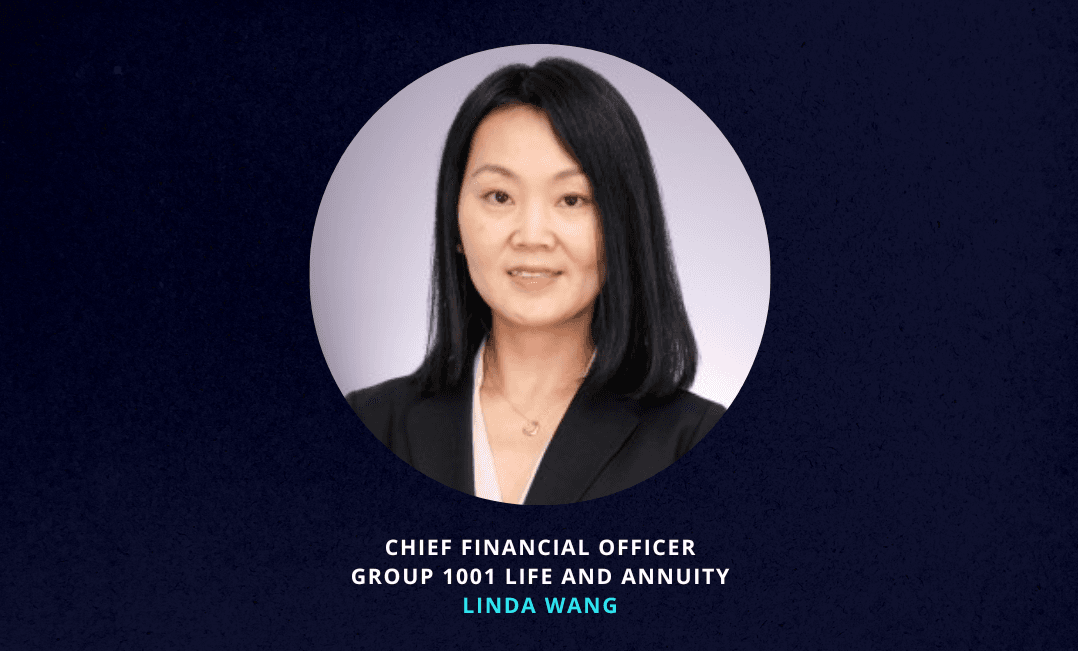
As we celebrate Women's History Month, it's important to highlight not only athletes but also those that work on the business side supporting women's sports. We had the privilege of speaking with the Chief Financial Officer of Group 1001, Linda Wang, on her career journey and insights. In April 2022, Group 1001 became a majority stakeholder in Parity as part of its multi-million-dollar commitment to women's sports.
With more than two decades of experience in the finance industry, Linda has proven herself to be a skilled and dynamic leader. Throughout her career, she has championed diversity and inclusion, and has been a strong advocate for empowering women in finance.
Read on to learn more about her experiences, as well as her perspective on the challenges and opportunities facing women in the finance industry.
You've risen to the top in a traditionally male-dominated industry. What do you think has helped you the most to succeed?
Having a good mentor. Around ten years into my career, I met my mentor, whom I still thank to this day. He believed in me and saw that I was capable of much more than I had been given at the time. He had the ability and the guts, if you will, to entrust me with more responsibilities before anyone else saw that in me.
It is a pretty male-dominant function, but he really believed in what I could do, and he gave me a lot of opportunities. I would love to pass that along and be a mentor for someone else, now.
How have you taken the qualities of that mentorship and applied them to your leadership style at Group1001?
People that I trust, I give them responsibilities. I don't micromanage. Giving people opportunities to take more ownership of their work is important for professional development and a better final product.
I always remember how I felt when I was first entrusted with more responsibilities and given the space to make important decisions. That’s how I became more successful, stronger, and a better teammate.
Can you tell me a little bit more about how your interests led you to where you are today?
My career has followed a rather untraditional path. I grew up in China, and I remember teachers and parents asking us as kids, “What do you want to be when you grow up?”. Some of my friends wanted to be scientists, some wanted to be doctors. I always said, “I want to be in business”. I have always been very good at math and knew I wanted to do something related.
In my last year of college, I discovered there is such a thing called an actuarial track. It wasn't popular in China, so I thought, “Why don't I just go to the United States for grad school?” I applied and got a scholarship from the University of Iowa. I loved the program. Since then, I have been on the actuarial track, then on to broader business management, and then the financial side of the company. It's something I really love doing and I'm happy I get to do what I love.
If you weren’t in this field, what is a job you would’ve loved to pursue?
I love cooking. I've always said that when I'm ready to retire and my kids are older, I want to go to French culinary school for a few years. That's my dream. My favorite meal to make for loved ones is a Chinese dish calledfuqi feipian.
What were some of the biggest challenges in the early stages of your career?
The actuarial side is a pretty male-dominated field in terms of senior leadership, and back when I started it was challenging for a woman to be recognized for her contributions. Even when a woman knew she had the right answer, because she would often present her ideas in a more collaborative and cooperative way, she was not taken as seriously as someone more assertive and direct. Her thoughtfulness was perceived as a lack of confidence, which turned into a roadblock to career progress.
I personally had to work on this and adapt to the environment. When a woman becomes very affirmative, they call her aggressive. The same behavior in men is perceived a bit differently. They'll call him confident, right? So, it's really a struggle for women to strike that fine line.
I think the situation is a lot better these days, even though of course it still persists. I do think society is a lot more open because of the discussions and conversations we've been having. We’ve all been taught to be authentic to who we are, right? It’s important for senior leaders to truly recognize that we all have different experiences and backgrounds that inform how we communicate at work. We must keep an open mind and take our colleagues seriously.
How would you describe your leadership style?
I tend to enjoy smaller, more informal conversations because they can really accomplish a lot and I’m open to hearing differing opinions. I'm okay with my team pointing out, “Hey, that idea of yours may not be the best,” and I'm completely fine with that.
I think that's important at a leadership level because no matter how smart the individual is, the strength really comes from the collaboration of the bigger team you are leading.
People have to feel comfortable sharing their ideas and speaking up in a respectful way.
What advice would you give to businesswomen who are just starting their careers?
I’ll give you an example. My first job was at a consulting firm. I worked many, many hours, a lot more than my colleagues, because I wanted to be recognized and I didn't know to say “no,” and I didn't feel confident enough to say “no”.
I took on way more than I could handle. Eventually, I broke down. From that point forward, I learned to do myself a favor and ask for help. It doesn't mean you are weak. You need to know your boundaries and be able to ask for help.
Another thing I’ve learned over the years is to build up resilience. Whether you are just starting out or late in your career, spending time to develop resilience will really benefit you. There are so many variables in the society we live in today and not everything can be under your control. So, being able to recognize your limitations, and being okay with them instead of panicking over things that you cannot control, will serve you as a whole person.
How do you incorporate your personality into your job?
I keep pictures of my kids in my office. I miss them when I’m working. I think it’s important to have constant reminders that there’s a bigger world outside of our jobs.
When I was in my twenties, I was only focused on work. I didn’t think that at the time, but looking back, I see that I didn’t care much about family and all I wanted was a successful career. That drove me relentlessly for the first few years, but certain things happened along the way to make me realize the world is much bigger, and that for somebody to really be happy and be able to bring that happiness to work, you need to be a balanced person. My husband, my kids, and my parents all remind me of what’s truly important at the end of the day.
What helps you maintain that balance?
Exercising, reading, and truly being humble. What I mean by that is understanding that the world doesn't revolve around you.
I tell my kids, you need to realize that sometimes this one little thing you want in your life may not go the way you want it, but there are 99 other things that have gone your way. Make sure you focus on the good stuff.
This interview has been edited and condensed for clarity.
Follow Parity on Instagram, LinkedIn, Twitter, Facebook, and TikTok to stay up-to-date on news surrounding elite women athletes and sports marketing.
WORK WITH PARITY
Level up your brand with partnerships, values-aligned initiatives and expert guidance.

