The Enhanced Games, the Olympics & the Cost of Athlete Exploitation

The Enhanced Games offered athletes $250K-$1M prize money plus six-figure salaries for 12-week training in Abu Dhabi, a stark contrast to Olympic athletes who receive zero direct payment from the IOC despite the organization's $7B+ in assets.
No direct financial channel exists from the IOC to Olympic athletes: The vast majority of Olympic and Paralympic athletes don't earn a living wage from their sport, forcing many to sacrifice educational and professional opportunities.
"Clean sport" skepticism drives athlete participation: thletes cite widespread undetected doping, outdated anti-doping systems (like clerical error suspensions), and feeling exploited by the IOC/WADA partnership as reasons for choosing the Enhanced Games.
On May 24th, 2026, a new show came to Las Vegas. The performers didn’t dance or sing, but they’ve already gotten the attention of the world at large, and the sports world in particular. This May, the first edition of the Enhanced Games took place with 50 athletes competing across track and field, swimming and weightlifting events. The difference maker? All of these athletes are taking performance enhancing drugs.
The Enhanced Games market themselves as “a global annual competition that celebrates human potential through safe, transparent enhancement, offering fair play, record pay, and unmatched athlete care.” Others have called it the “Steroid Olympics,” the “Doped Games” or even “The Clown Show.”
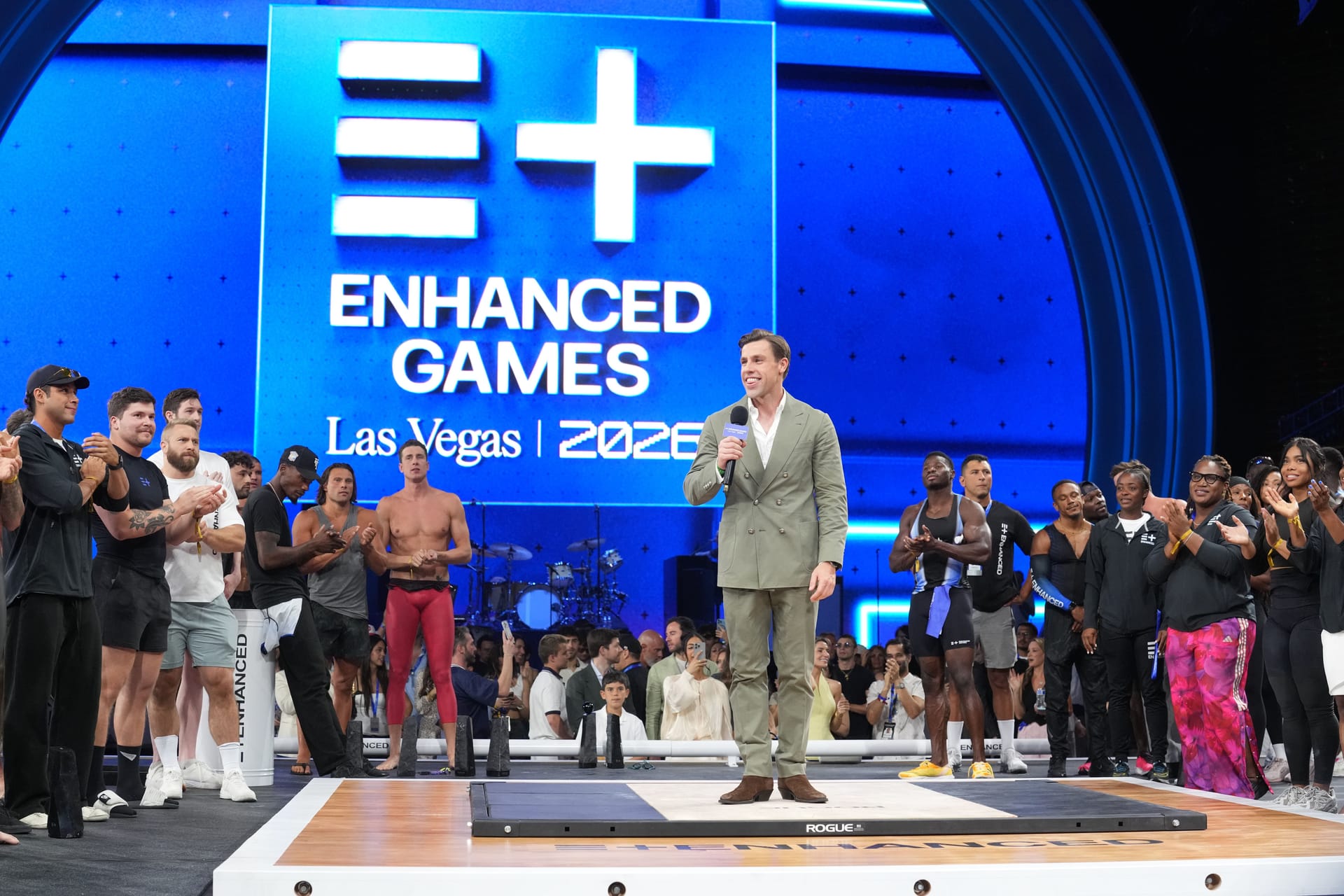
The reception of these Games has been confused and lukewarm at best, all the way down to hateful and repulsed. The concept of fairness, of “playing clean,” in sports is something that is extremely hard to let go of for many. For a majority, sports lose their meaning without it. And for the Enhanced Games to see themselves as an alternative Olympic Games has raised more than one blood pressure over the past months.
But beyond the emotions, what is happening behind the scenes at the Enhanced Games, and what can we learn from this controversial competition?
The Enhanced Games’ format is simple: it invites athletes to a 12 week training and doping regimen in Abu Dhabi, during which time athletes will be overseen by medical professionals and trainers, and compensated handsomely for their time. At the end of these 12 weeks, they will compete against one another at Resorts World in Las Vegas in a series of events. Allegedly the salary for these 12 weeks alone is in the high six figures. When they get to race day in Vegas, they have the potential to earn even more: one million dollars for breaking a World Record, and $250,000 for winning one of the Games’ competitions. This opportunity also comes with a fair amount of notoriety (which pays on social media these days), and paid partnerships.
The Enhanced Games has hit bumps in the road of public opinion, but they did not have any trouble recruiting their gladiators. Many Olympians and many more of Olympic caliber have not hesitated to put pen to paper and pack their bags for a war-torn training compound.
Why?
Why compete in an unproven competition that puts not only your reputation as an athlete but also your health at risk? Why throw your lot in with an organization who values advancement over well-being, and profit over people? I’ve combed through athlete statements and announcements, trying to read between the lines and get into the heads of those athletes who participated. Who have made what many view as a career-ending and risky decision.
In order to answer that question, I found myself thinking about the Olympics.
The magical aura that surrounds the Olympics sometimes makes us forget that the International Olympic Committee (IOC) is also a business. I said this to a friend recently (that the Olympics is a business,) and she laughed, saying “Oh really? I had no idea!” They distract us with Ancient Greece and laurel wreaths, and sell us stories of dreams and glory. And we fall for it. We cry, we laugh, we gasp, we dream. And, most importantly, we pay.
The IOC has over $7 billion in assets, with billions of dollars of future revenue already secured via sponsorship and media rights deals. The IOC’s directors’ tax returns show incomes of more than $6 million. Olympic host nations receive billions.
But there’s a group who’s missing out.
There is no direct financial channel from the IOC to Olympic athletes. Athletes are not paid, one dollar, by the Olympics. If athletes are paid at all to be on their national teams or compete at the Olympics, they are paid by their countries or their sport’s governing body. And what is more, the vast majority of Olympic and Paralympic athletes do not make a living wage off of their sport.
So when I started looking into Enhanced Athlete statements and watching their videos, the thing that came up, time again, was the money. Many athletes have sacrificed professional and educational opportunities to become the athlete that they are, without compensation to compensate for the paths untraveled. Many athletes live and compete in debt. For many, the opportunity of so much money in such a short span of time is just an opportunity too good to pass up, whatever the other costs.
Another common thread was a feeling that “clean” sport is a theater of sorts, propped up by the people making money off of the partnerships between WADA (World Anti Doping Agency) and the IOC. As long as there have been sports there has been cheating, and athletes get caught for using performance enhancing drugs all of the time. For every athlete who is caught, it is not hard to believe that there might be 10s or 100s or even thousands of other athletes who are using prohibited substances but are simply not caught. In the minds of many athletes, if clean sport is also full of these drugs, why not use them and at least get paid properly?
A final, to me heartbreaking, reason was that there are many athletes who have felt let down by the politics of the Olympics.
The WADA/IOC clean sport protocol includes athletes self-reporting their location daily, so that they can be drug tested at any time. I have done this for USADA, the US’s anti-doping organization. The platform for reporting is clunky and out of date, and many mistakes are made, not by the athletes, but by the organization. Mouhamadou Fall, a French track sprinter, received an 18 month suspension for failing to report his location properly three times. He is now an Enhanced Game athlete. Was he actually doping? Maybe. Was his suspension due to what was essentially a clerical error? Maybe that too. But to be banned because of paperwork? Because of mistakes? It’s not the kind of thing that inspires confidence.
The brand of the Olympics is so strong that it has come to stand in for what is “pure” and what is “good.” But the Olympics is far from a perfect organization. Because, while its roots go back thousands of years, the modern incarnation is just that: a company. A business. And it’s a business that needs to do better by its athletes. They are not the IOC’s employees, which is by design. But nor are they our gladiators or our playthings. They do not exist purely to entertain: they need money to live on, just like the rest of us. They cannot live on dreams alone.
I think the Enhanced Games serves as a harsh reminder of where athletes turn when we don’t treat them well. If we value them the way we value sports (and sports are valued at billions and billions of dollars annually), we need to treat them better. We need to pay them a living wage as employees, and build leagues and competitions that center athlete well-being over profit. Because while the Enhanced Games contracts are a shiny, zeroed thing, these Enhanced Games athletes are being used to test out drugs that Enhanced hopes to sell right back to us as we sit and watch on the couch.
Do I think these organizations are the same? Of course not. I think the Olympics is an imperfect organization that strives to do better. I think the Enhanced Games is a dangerous idea that plays with athletes’ bodies for sport. But there is a common thread here, and to pull on it reveals a dark underbelly: people who make money on athletes’ dreams and sacrifices without taking care of the athletes they profit from.
But it doesn’t have to be this way! We have seen new leagues springing up that provide athletes with long term contracts that include things like retirement and medical insurance. We are so proud to be supporting many athletes in these leagues, and hope that this will be what becomes the norm, not the exception moving forward. We are also proud to be able to step in where the gaps currently exist, and show athletes that there are companies like us who value the work that they do: you don’t have to go to Abu Dhabi for that.
WORK WITH PARITY
Level up your brand with partnerships, values-aligned initiatives and expert guidance.

