What Happened After Equal Pay? The World Surf League's Case for Investment

The WSL became the first U.S.-based global sports league to award equal prize money across all levels of competition.
WSL Finals livestream viewership grew from 6.8 million viewers in 2021 to 10.6 million in 2023.
In 2025, the WSL reported reaching a global audience of 80 million people across digital and linear platforms.
If you’re in the women’s sports world, chances are you remember where you were when big things happened. I remember the exact street I was on when I was listening to a podcast that announced that the World Surf League (WSL) would award equal prize money to men and women across their tournaments. I have never watched a surfing competition, nor have I since, but that barely even matters. When a League with this many dollars and this many eyeballs decides to do something like this, it makes waves (pun intended) across all of women’s sports. As the WSL season kicked off in April, we’re taking a look back at their decision to award equal prize money, how the league has changed as a result, and how other teams and leagues can learn from their example.
The Deal
The WSL made their landmark decision and subsequent announcement in September of 2018, and the changes went into effect for the following season. One of the WSL’s biggest moves was to announce equal prize money not only for their top competitions, but for all competitions that fall under the WSL umbrella, from juniors right on up to the elite level. At the time, the WSL was the first US-based global league to affect such a change, and they remain lonely at the top. (Although it’s worth noting that many other leagues don’t operate on a prize money-as-salary basis).
In many women’s sports, compensation changes have come for the women at the tippy top. Tennis’ Grand Slams and many golf tournaments for instance can now boast equal prize money for men and women. However, the players at the top are also the ones getting the biggest sponsorship deals, so a huge proportion of these sports’ money that is earmarked for the women’s game is going to a precious few athletes. This leaves women in the middle tier, or women who are just starting out, to share the last sliver of the pie between them. By making the decision to champion equality from the bottom up, the WSL changed surfing’s whole pipeline. Women who have yet to make their big break can make real money by winning mid-level competitions, just like the men can, without having to wait until they “make it” for their pay day.
We can also thank the juniors in part for this deal even getting done in the first place. A fascinating detail of the push towards change lies in the tradition of winners posing with giant checks on the podium. At the junior level, it is common practice for the male and female winners to pose for a post-competition picture together. This picture went viral in 2018, with inequality written in large sharpied letters, right in front of the viewers’ eyes. With Zoe Steyn only receiving half of what her male counterpart did, the social pressure mounted to a breaking point.
I also think that credit is due to Sophie Goldschmidt, who was WSL’s CEO at the time. So often meaningful change starts at the top, and when we put women in leadership positions, they recognize when (now) and where (everywhere) change needs to happen.
Looking Back
So what changes did this massive policy shift precipitate? How has this investment in women’s surfing changed the WSL?
The WSL is a private company, so reporting on how this investment has changed viewership numbers or the value of the league is not a clear cut endeavor. We get access only to these numbers as the WSL decides to share them, but they have decided to do so periodically between then and now, so let’s dive into what we do have.
In 2021, the WSL decided to host a one day event at the close of the season that would crown their World Champions rather than a points system or series of competitions. This allowed them to focus an unprecedented amount of marketing and social media content on the event, with a coordinated content roll out leading up to the day. Cementing her status as one of the best in the game, Carissa Moore backed up her Olympic gold with a World Championship, grinning beside Gabriel Medina with an equally sized cup on the podium. WSL video content before the finals generated 11.3 million video views, and the final itself drew 6.8 million livestream viewers. Everyone was excited to watch both the men’s and women’s competitions, and the sky high numbers represented a diverse audience tuning in from all over the world.
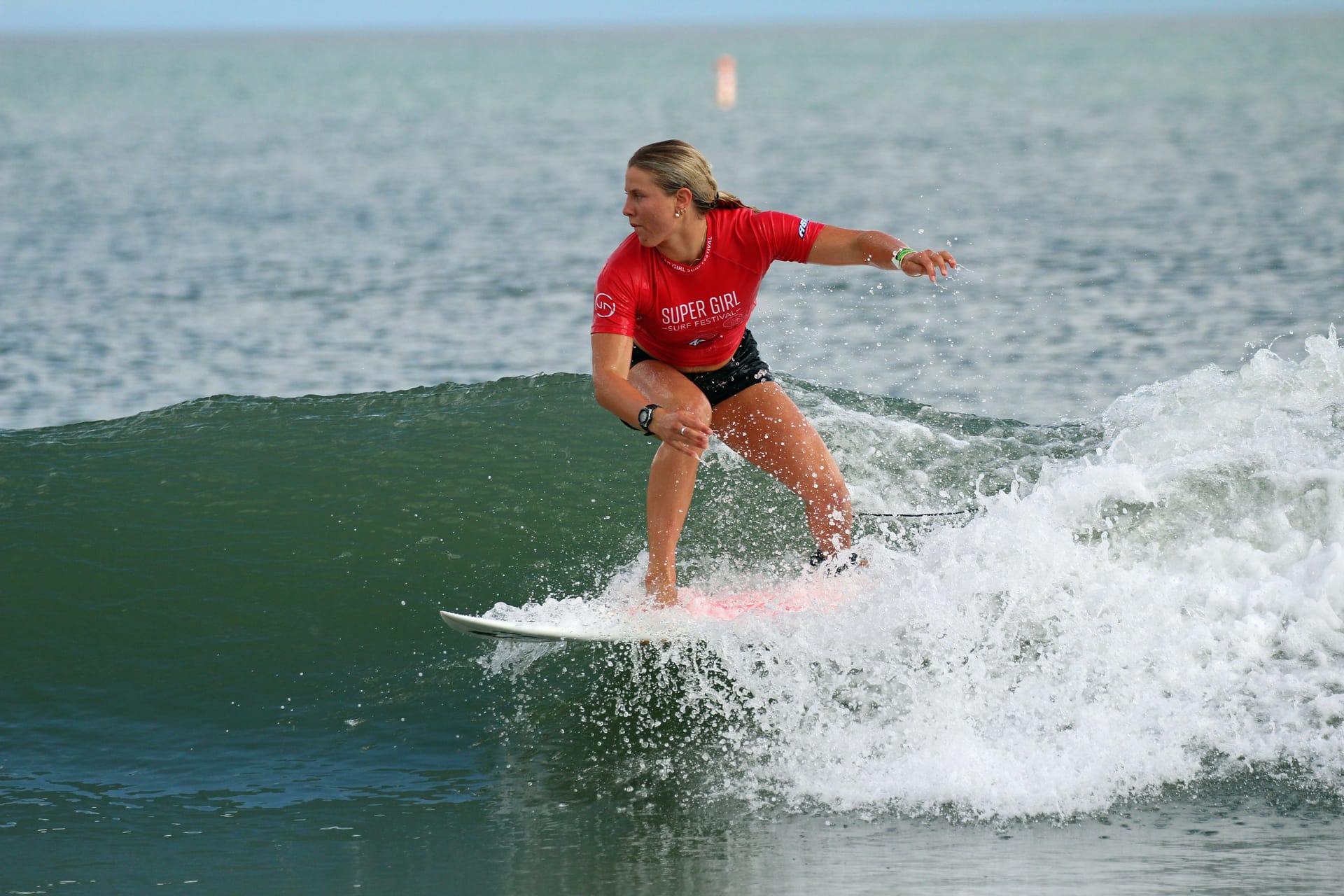
With millions of eyes on them, the WSL realized they needed to affect another change in how they supported their female athletes: they started setting them up for success. For years during competition, if the weather shifted and the conditions worsened, organizers would pause the men’s competition and send the women out. But along with a monetary investment, the WSL decided to change the waves. It’s strange to compare waves with astroturf or courts, but, in a way, the waves are a surfer’s pitch. The best conditions allow women to showcase best what they are capable of, in any sport, on any surface. Female surfers can shred, but without the proper waves there’s only so much anyone can do. Once the door was opened, the female surfers tore through it and never looked back.
Just two years later in 2023, livestream viewers at the finals were up to 10.6 million, and pre-event video views were over 25 million. Year over year people continue to flock towards surfing, with viewership numbers continuing to climb. In 2025, the WSL reported they reached a global audience of 80 million people across linear and digital platforms. If everyone who engaged with the WSL last year could buy a ticket to an event, the WSL would fill stadiums with 80,000 seats 1,000 times over in only one season. And while the WSL doesn’t separate their men’s and women’s viewership numbers, we can only assume that a huge driver of the increased viewership has been the changing investment in the women’s side of the sport.
Surfing has changed dramatically since the WSL’s decision to award equal prize money across all levels and genders. Surfing was included for the first time in the Olympics, with Carissa Moor’s inaugural gold medal helping to drive even more girls and women out into the waves. Surfing has been at the forefront of changing the way we think about equality in sports, and continues to speak loudly in a conversation that is far from over.
Where do we go from here?
When we talk about trying to achieve pay equality in women’s sports and the barriers that exist, we’re often talking about money in terms of a reward or an investment. We hear, “well, they haven’t earned it yet,” “the viewership numbers aren’t there,” or “there aren’t enough players to make it exciting.” These comments imply that there is some sort of monetary reward waiting for women once they magically become more exciting to watch.
Then there is an investment. Investment is money that comes before the viewership numbers, before there are enough teams to field a full tournament, before the talent has become trendy.
The biggest takeaway from the WSL’s example is that it takes investment to grow: it simply costs money to grow a league. It costs money to grow talent, to grow reach, to boost viewership. This is something men’s sports leagues have known for decades, but, when it comes to women’s sports, we somehow expect women to do the same, or even more, with less. We put the burden on the women to “be exciting” without giving them the spotlight. Without a paid video editor to splice together fast paced highlight reels, what would 80 million viewers even watch?
Female athletes just aren’t afforded the same time to hone their craft as male athletes are, and they aren’t paid enough to train, rest and repeat. As we have shown through our research, the vast majority of female athletes need to work another job to afford chasing their dreams. They need to be both athlete and video editor, looking dazzling on camera and working hard to throw the confetti just right behind the lens.
The WSL realized that to continue making their product exciting to watch, key monetary and structural changes were needed on the women’s side of the sport. For other leagues to follow suit, they need to understand that they need to spend money to make money, and hibiscus flowers grow where you water them.
WORK WITH PARITY
Level up your brand with partnerships, values-aligned initiatives and expert guidance.

